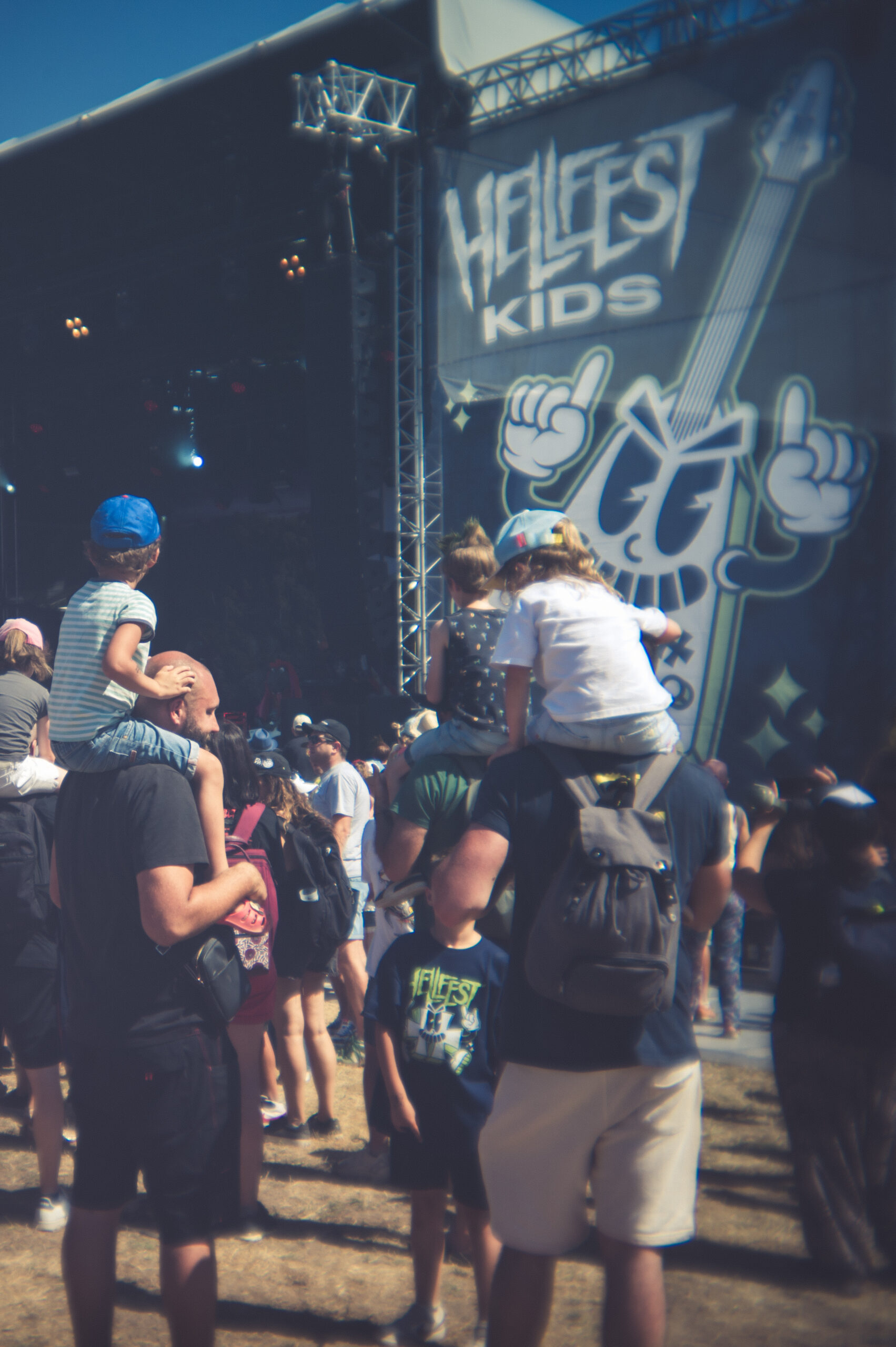
Today, the metal audience consists mainly of adults and, to a lesser extent no doubt, teenagers. At the end of the 20th century, in his book Metalheads: Heavy Metal Music and Adolescent Alienation (1996), Jeffrey Jensen Arnett presented the heavy metal concert as a rite of passage into adulthood for teenagers at odds with their social environment. The teenagers Arnett referred to have grown up, grown older and become parents, and the audience has diversified considerably, losing some of its underground status. Since 2019, Hellfest’s statistics have shown an audience attending festivals and concerts with their children.
Whilst in the 1980s metal was perceived as corrupting young people – as evidenced by Dee Snider’s appearance before the US Congress in 1985 – since the early 2000s, several artistic projects, particularly in Europe, have explicitly targeted an audience of children, sometimes as young as two or three years old. This phenomenon remains largely overlooked by the field of metal studies: academic literature on the genre has primarily focused on the representation of childhood in song lyrics; indeed, a recent study shows that childhood is a central and recurring theme in metal, across all subgenres (Korn has devoted a significant portion of its discography to it). However, the lyrics predominantly adopt fairly conventional conceptions of childhood, such as the idea of innocence – conveyed with a certain nostalgia or through the evocation of its loss – or hope and despair regarding the future: they do not challenge the dominant representations of childhood (Barratt-Peacock, 2025). Researchers are also interested in the identity formation of young adult metal fans, but, to our knowledge, much less frequently in the actual reception of the genre by very young children or in initiatives designed to facilitate this.
Here are three projects which, drawing on approaches that differ greatly from one another, offer food for thought on how to make metal accessible to the very young.
In Finland: Heavysaurus
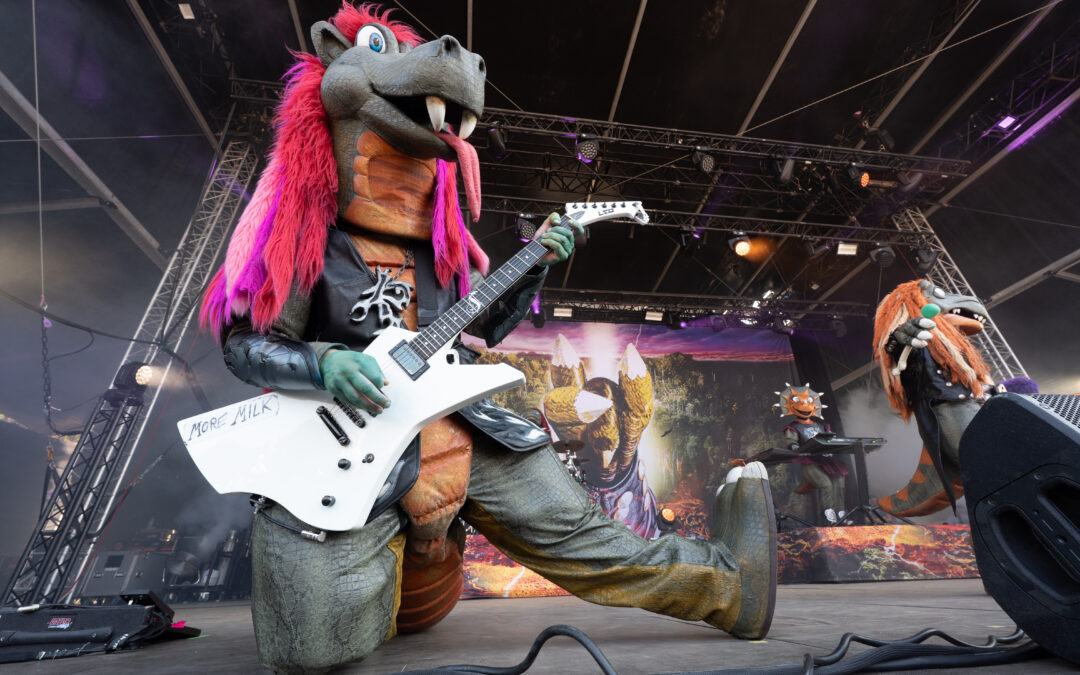
Formed in 2009 on the initiative of Mirka Rantanen, drummer with the band Thunderstone, Heavysaurus is undoubtedly the longest-running project and the one that has enjoyed the greatest success to date. The musicians perform dressed as dinosaurs and write original songs, designed for a young audience, on very tangible childhood themes such as homework, bath time, the fear of the dark, and so on. The volume is kept low to protect the children’s hearing. This project has inspired other countries: translations of some songs are available in German and Spanish; more recently, an English version of one of their first songs, Heavy Metal Horns, was released in the UK.
In France: Helldebert
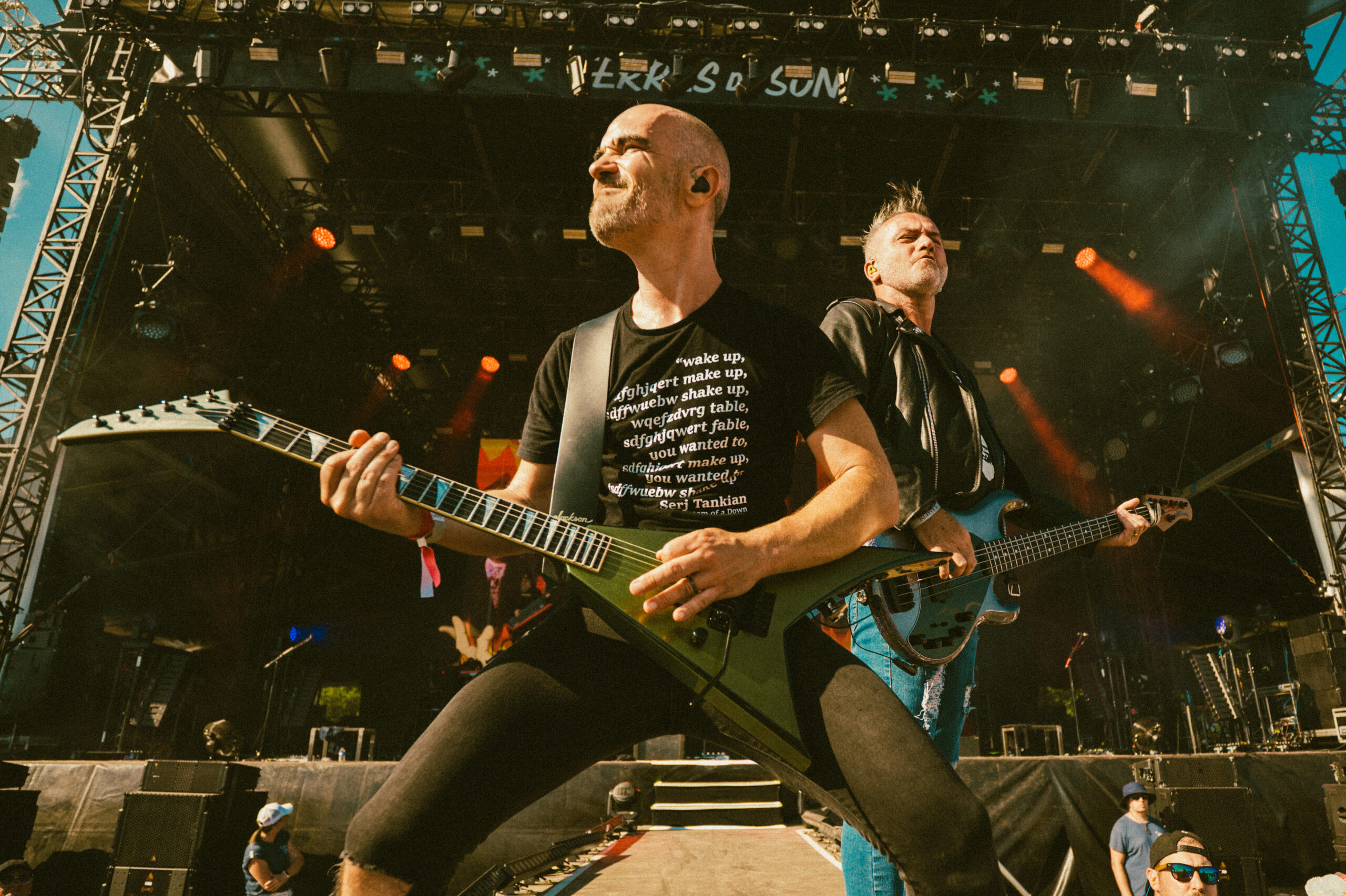
In 2024, the singer Aldebert, who became known to the general public through the series Enfantillages, created an alter ego named Helldebert for the album Enfantillages 666. Like Heavysaurus, this consists of original material, written specifically for this project, but with limitations on the adoption of the genre’s conventions: no systematic growling; it features ‘little touches of metal’ rather than a complete immersion, whilst remaining true to the Enfantillages universe. His approach has been supported by some of the biggest names on the national and international metal scene, such as Max Cavalera of Soulfly, Johan Hegg of Amon Amarth and Serj Tankian of System of a Down, who all contributed to the album. The project was also extended with a series of concerts at the Philharmonie des enfants in Paris.
Prior to this, several projects aimed at young audiences had already been launched, such as the show *Metal for Kids*, created by the band Smash Hit Combo. For two years, Hellfest organised Hellfest Kids, bringing together several bands including Helldebert and Heavysaurus, as well as the Nantes/Rennes-based band Hipskör. Finally, in 2022, Thierry Varion, based in Puy-de-Dôme, produced a show with and for children – Le Repos de Freyja (lyrics by Corentin Charbonnier, orchestration by Thierry Varion) – introducing children to metal culture through a show written specifically for young audiences.
In Switzerland: Metallikids
The Metallikids project takes a different approach: the band does not compose songs aimed at young audiences, but covers existing tracks selected from the metal repertoire and, more broadly, from rock – ranging from Rage Against the Machine to Iron Maiden, as well as Nirvana: the project is not limited to metal; it covers a wider spectrum of ‘protest’ rock music. Another feature specific to Metallikids is the educational aspect. The musicians explain to the children the message behind the chosen songs (for example, that Killing in the Name is about the right to disagree) and show that metal allows feelings of anger or rebellion to be expressed through music. The concerts are sometimes complemented by pre-event workshops (a light-hearted, introductory session on the genre, or making a cardboard guitar), making it a genuine educational programme rather than simply a concert for a specific audience.
How can we introduce metal to younger children?
These two approaches are not mutually exclusive: each, in its own way, helps to make metal accessible to children. Hevisaurus relies on fiction: dinosaurs and their narrative world serve as a unifying theme. Helldebert, whilst exploring themes that resonate with children, preserves the protest element characteristic of metal with songs such as La Marche du monde (featuring Amélie Nothomb) or Le Cartel des cartables. Metallikids draws on the existing repertoire and focuses on explicitly explaining the meaning and context, telling children what the songs are actually about.
The Listening to the Ocean project follows more closely in the footsteps of this latter approach: introducing children to existing works by metal bands on the themes of the ocean and climate change, whilst taking care to clarify their context and meanings. These three initiatives obviously do not claim to be exhaustive: if you know of any other projects of this kind, in any language, please do let us know in the comments or by email – we’d be delighted to expand this overview!