When Coral Reefs Speak Out:
Listen in Order to Take Action
Coral When Coral Reefs Speak Out: Listen in Order to Take Action
A companion project to Listening to the Ocean (2027-2029)
This project is supported by the FMSH, “Oceans: Social Worlds, Living Worlds” call
Coral reefs are among the ocean ecosystems most threatened by climate change, yet most of us have never heard one from the inside. This project explores listening as a way of knowing and caring: a scientific tool for understanding reef health, and an educational one for helping young people and the wider public connect with the ocean.
Listening inside the coral
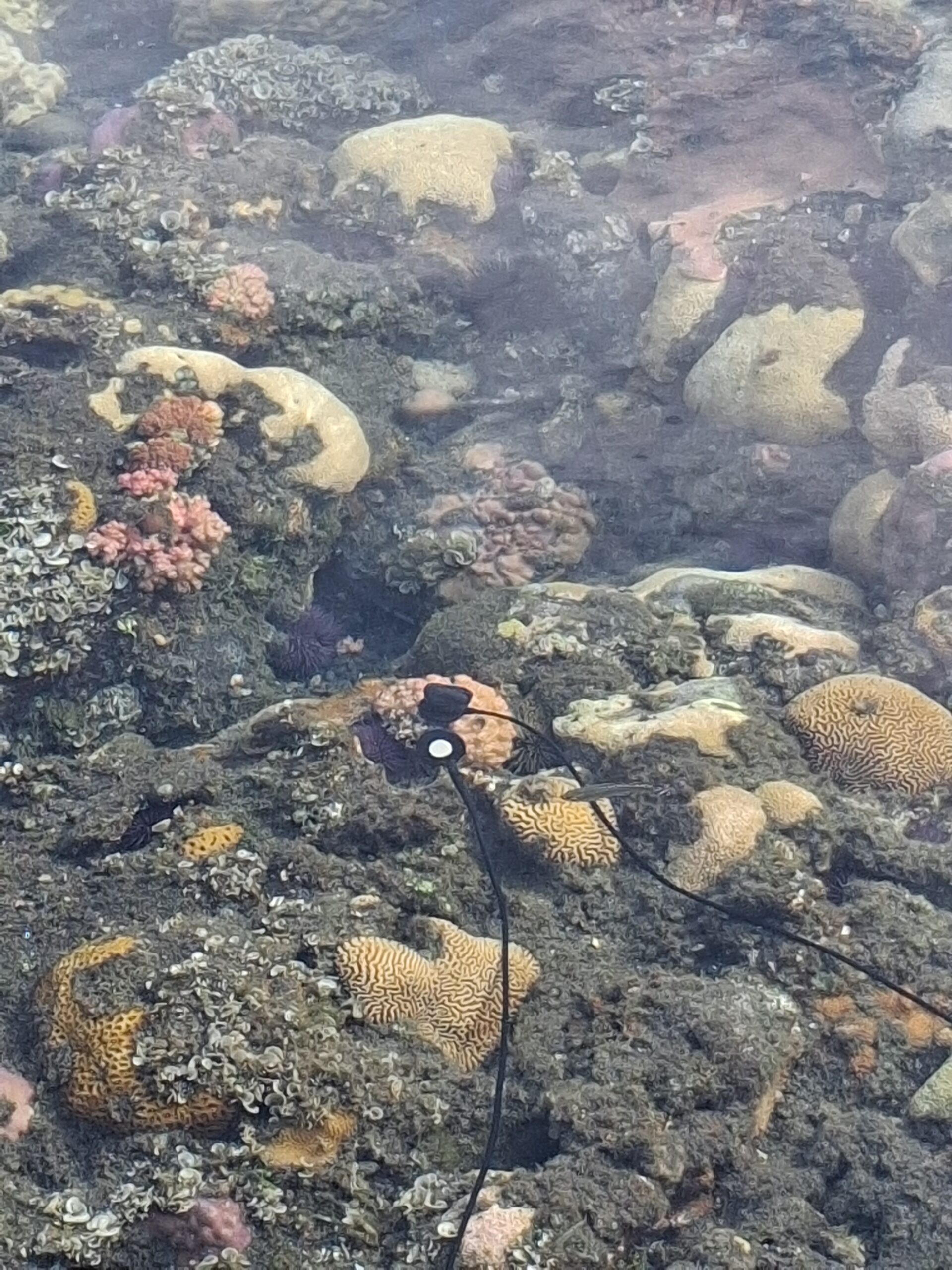
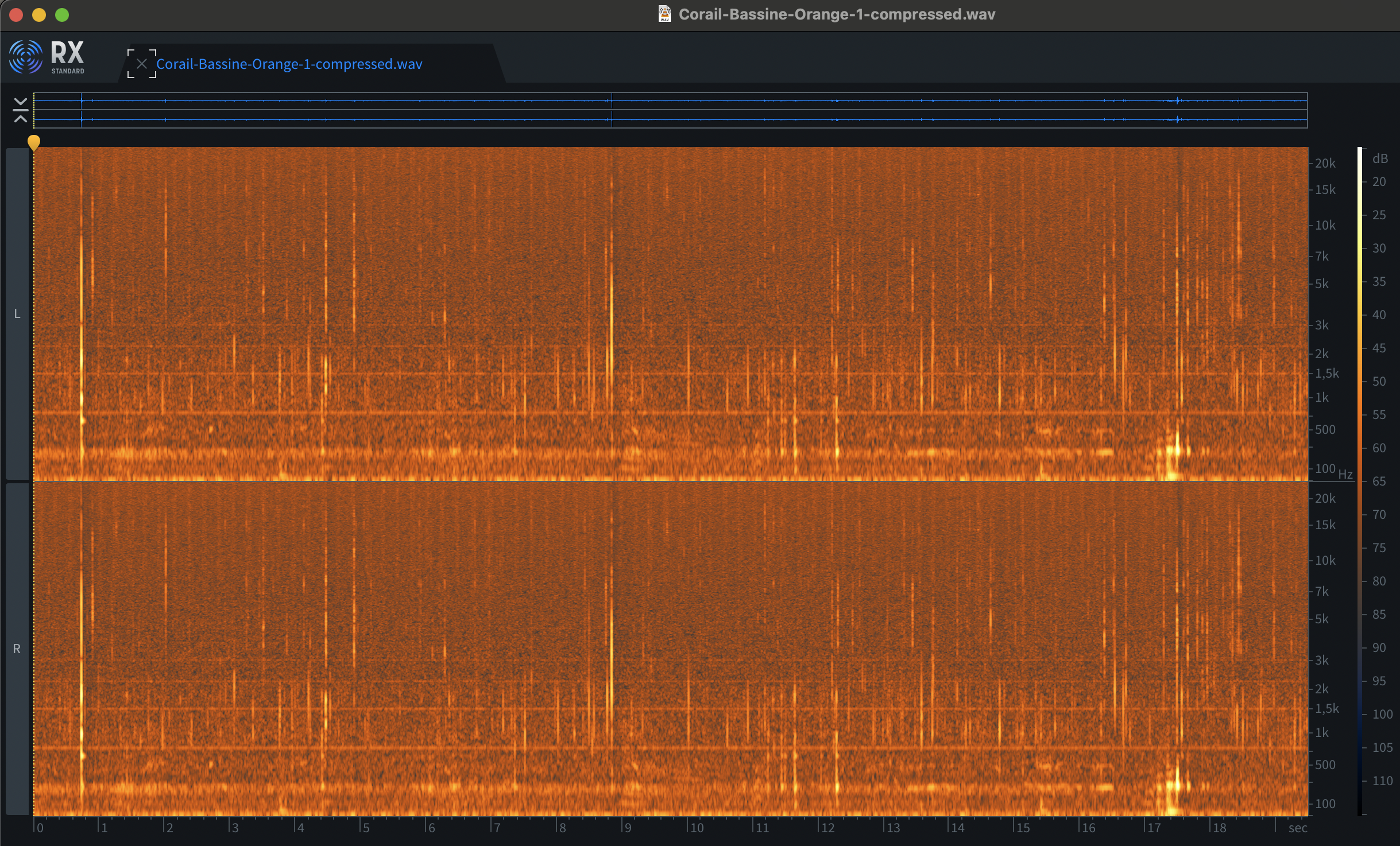
Most underwater bioacoustics rely on hydrophones, which pick up sounds travelling through the water: waves, fish, boats. We are testing something different. Contact microphones, placed on coral much like a stethoscope, record the vibrations within the coral’s own skeleton, separately from the noise around it. A control recording on an inert rock helps us tell the sounds of living organisms from background noise.
The method was first tried in January 2026 in La Réunion by sound engineer Ihsane Coulombel, with Reef Check France. Over three years, we will refine it, compare the sound signatures of healthy and degraded corals, and build a reference catalogue of reef sounds with marine biologists at CCMAR (Portugal) and partners in La Réunion. The long-term question is whether these sounds can serve as early indicators of stress on reefs.
There is no established specialist in coral sound yet. The analysis method will therefore be built collectively, by scientists, teachers and students together.
Learning with young people
The educational side follows the art-based participatory research approach developed in Listening to the Ocean. Students in partner schools (La Réunion, France, Portugal) work with the recordings, help interpret them, and express their feelings about the climate crisis through creative practice, in line with the European GreenComp framework. The aim goes beyond transmitting knowledge: to support engagement and to treat reefs as living places we can enter into relationship with. Teaching resources will be co-created with teachers and released as open access.
Two projects, one way of listening
Listening to the Ocean uses art-based participatory research to help young people explore their feelings about the climate crisis, while this companion project adds new scientific recordings from inside the reef, adding new soundscapes to be explored by students and teachers. The projects thus feed each other: coral recordings become raw material for the students’ musical and artistic workshops in Listening to the Ocean, and students’ perspectives help shape how the sounds are interpreted. The two projects also share milestones, including a mid-term colloquium and the closing conference of Listening to the Ocean in 2028.
What will come out of it
- A comparative archive and reference catalogue of coral sounds
- Scientific publications and an improved recording method
- Open-access teaching resources, co-created with teachers
- Immersive installations (3D audio, 360° video) for planetariums, museums and the web
- A foundation for a future international consortium and a global acoustic observatory of reefs
Team and partners
Project leads: Pascale Haag (EHESS), Ihsane Coulombel (CNRS), Ana Amaral (CCMAR, University of the Algarve).
Collaborators: Diogo Paulo (CCMAR), Russell Arnott (Incredible Oceans, Falmouth University), Lucia Di Iorio (University of Perpignan), Jean-Pascal Quod (Reef Check France), Laura Taubman, Alicia Pasquet-Forster, and the CNRS and Cité des sciences outreach teams.
Photos crédits :
Hervé Thouroude