About Us
"OCEAN AND CLIMATE"
Art/Science call
The Art/Science project call aims to encourage the co-creation of artistic works related to the various challenges of the Priority Research Programme “Ocean and Climate” (CNRS/IFREMER).
The present project falls within the 7th challenge of the call: Sharing with the public the discovery of the Ocean and its associated societal issues.
It focuses specifically on one of the call’s sub-challenges: Stimulating the emotional dimension of the ocean by combining science and art, while offering a new perspective on scientific questions and societal issues.
The project will mainly be conducted during the academic year 2026-2027.
A participatory research grounded in metal music
Across musical traditions, politically and socially engaged music plays a central role in shaping identities, and supporting collective mobilization (Street, 2012; Collinson, 2022). Situating metal culture within this lineage, while focusing on a genre still marginal in educational and research contexts, offers an original framework for articulating artistic creation and environmental education.
Our Youtube Channel
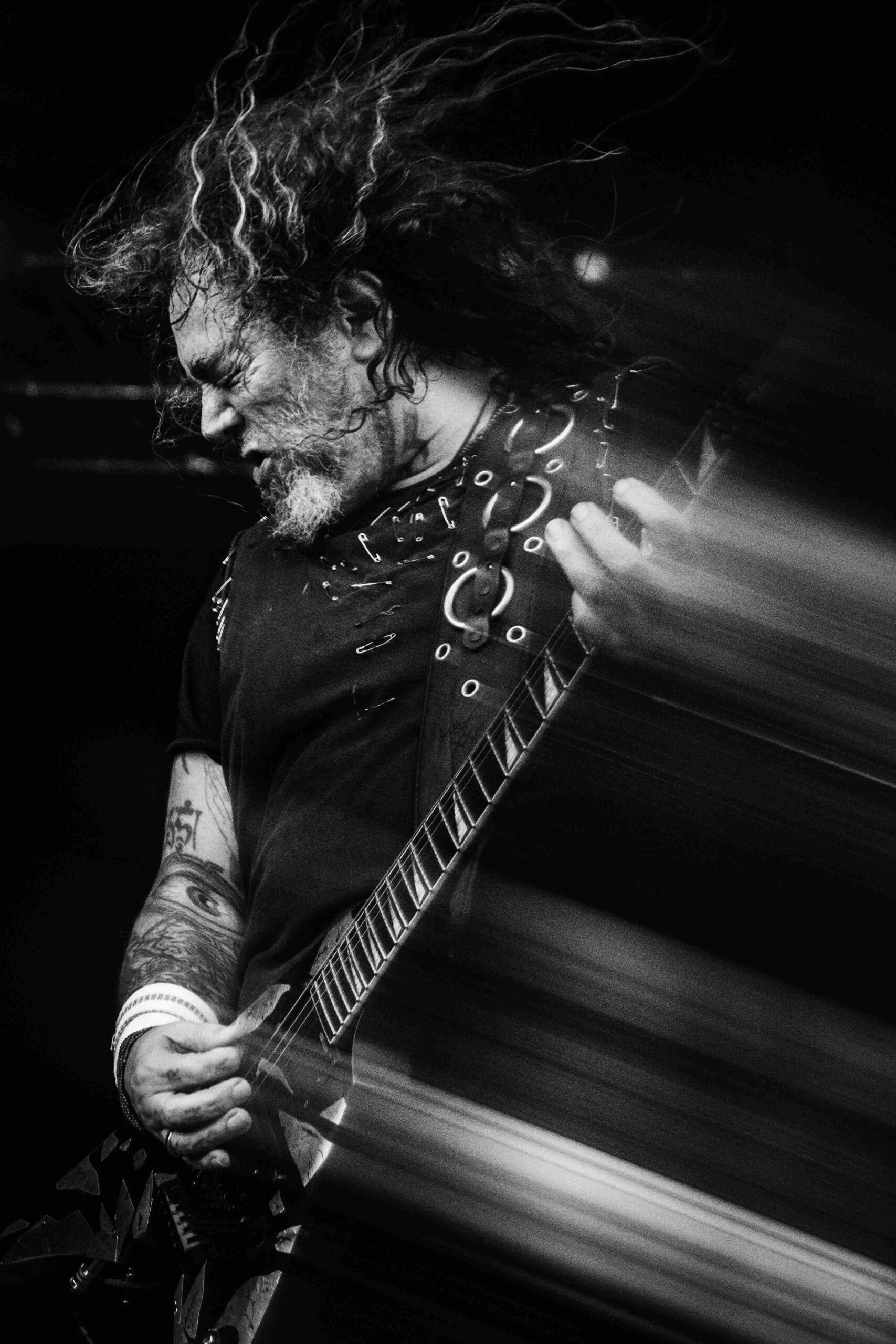
Metal music occupies a distinctive position in contemporary culture, characterized by cathartic intensity, critical narratives, and an ethos of resistance. It ‘makes use of its harsh lyrics, sounds and visual imagery to express critical concerns about human behaviour and decision making and anxieties about the future’ (Wiebe-Taylor, 2009). Bands such as Gojira, Architects, Mawiza, Cattle Decapitation or Heaven Shall Burn illustrate how metal can express ecological concerns and denounce environmental destruction to promote collective responsibility. These practices are pedagogically meaningful and demonstrate the genre’s capacity to render ecological urgency emotionally salient.
Although art-based research involving metal music remains limited, existing literature highlights its educational potential. Metal’s narrative worlds, allegorical lyrics, and engagement with disruption and catastrophe can foster critical thinking and scientific literacy (Schmaltz, 2016), while resonating with concepts from complexity science (Angeler et al., 2016). Eco-metal is identified as a genre where art, socio-environmental critique, and activist engagement intersect (Weston et al., 2021).
From a pedagogical perspective, metal culture thus offers important resources. Contrary to persistent stereotypes, empirical studies show that listening to and practicing metal does not increase aggression, but can support emotional regulation, identity construction, and resilience (Sharman and Dingle, 2015). In educational contexts, these emotional dimensions are particularly relevant for addressing eco-anxiety. Within the present project, metal music is thus conceived as both a pedagogical medium and an emotional resource to support participants’ sustained engagement.
How does the project work?
The project is conceived as an international, collaborative endeavour. To enable broad participation despite limited resources, the project is structured around a set of shared, open-access materials and a flexible implementation model: partners will have access to a collaborative online platform to share resources about ocean literacy and short modules will be designed to facilitate the approach to metal music: contextual texts on the genre, guidance for analysing songs, playlists of environmentally engaged bands…
Each school will be invited to adapt the project to its local context. This involves listening to and analysing songs, connecting these artistic experiences to scientific insights, and guiding students toward creative outputs: this may take the form of musical composition, poetry, visual art or multimedia work, in collaboration with researchers or with local artists. Each partner school will contribute a selection of student creations, reflections on the process, and, if they wish, additional pedagogical materials they develop locally. These contributions will be gathered on the online platform, gradually forming a collective gallery of youth voices around ocean and climate issues.
Ultimately, through this international collaboration, and by providing schools with a ready-to-use framework, the project aims to foster young people’s connection to the ocean in ways that empower them to imagine equitable and sustainable futures.
Throughout 2026 and 2027, participating sites will also be encouraged to organise local dissemination events, such as exhibitions, performances, or collaborations with universities, galleries or music festivals, to highlight students’ work and involve broader communities in the project.