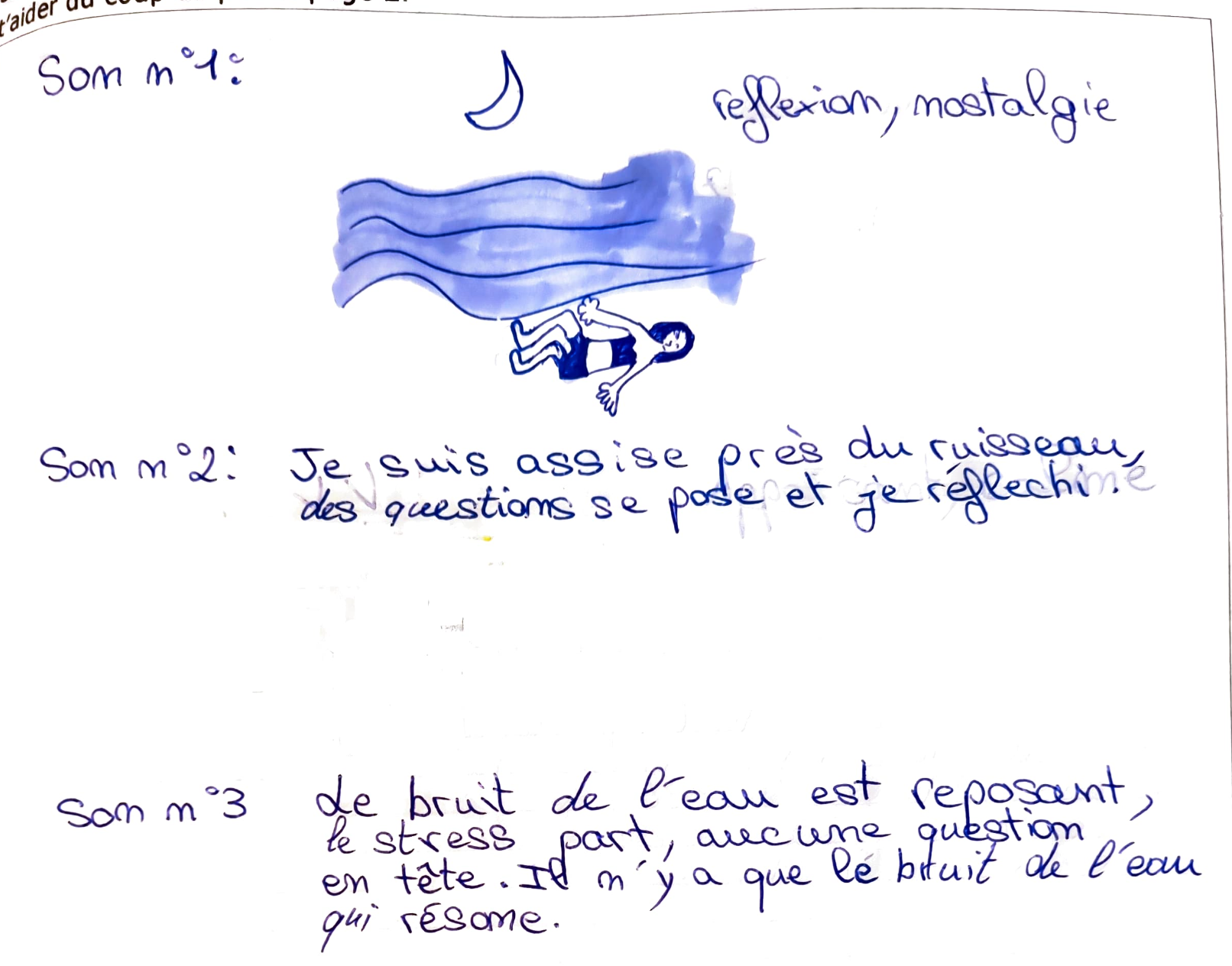
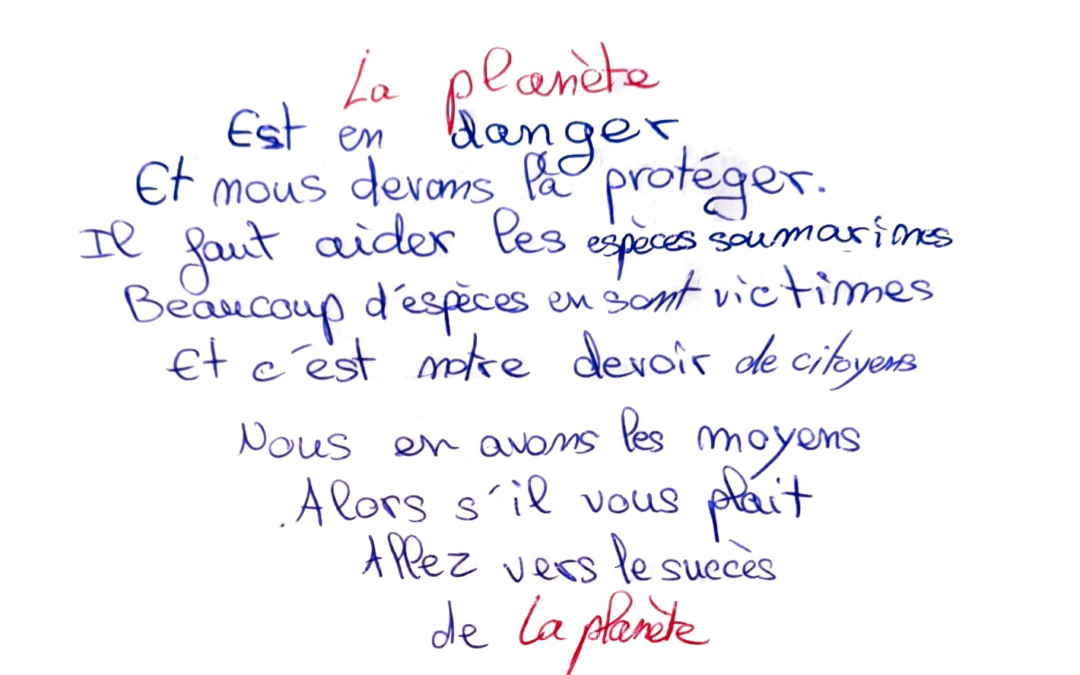
In the spring, the project was launched for the first time in a class at Lycée Parriat in Monceau-les-Mines (France), in collaboration with Mathieu Py, a geography teacher and amateur guitarist passionate about metal music. As part of the standard geography curriculum on ocean environments, he led a class of around thirty Year 10 pupils through a series of lessons combining listening, reflection, creative output and feedback for the researchers.
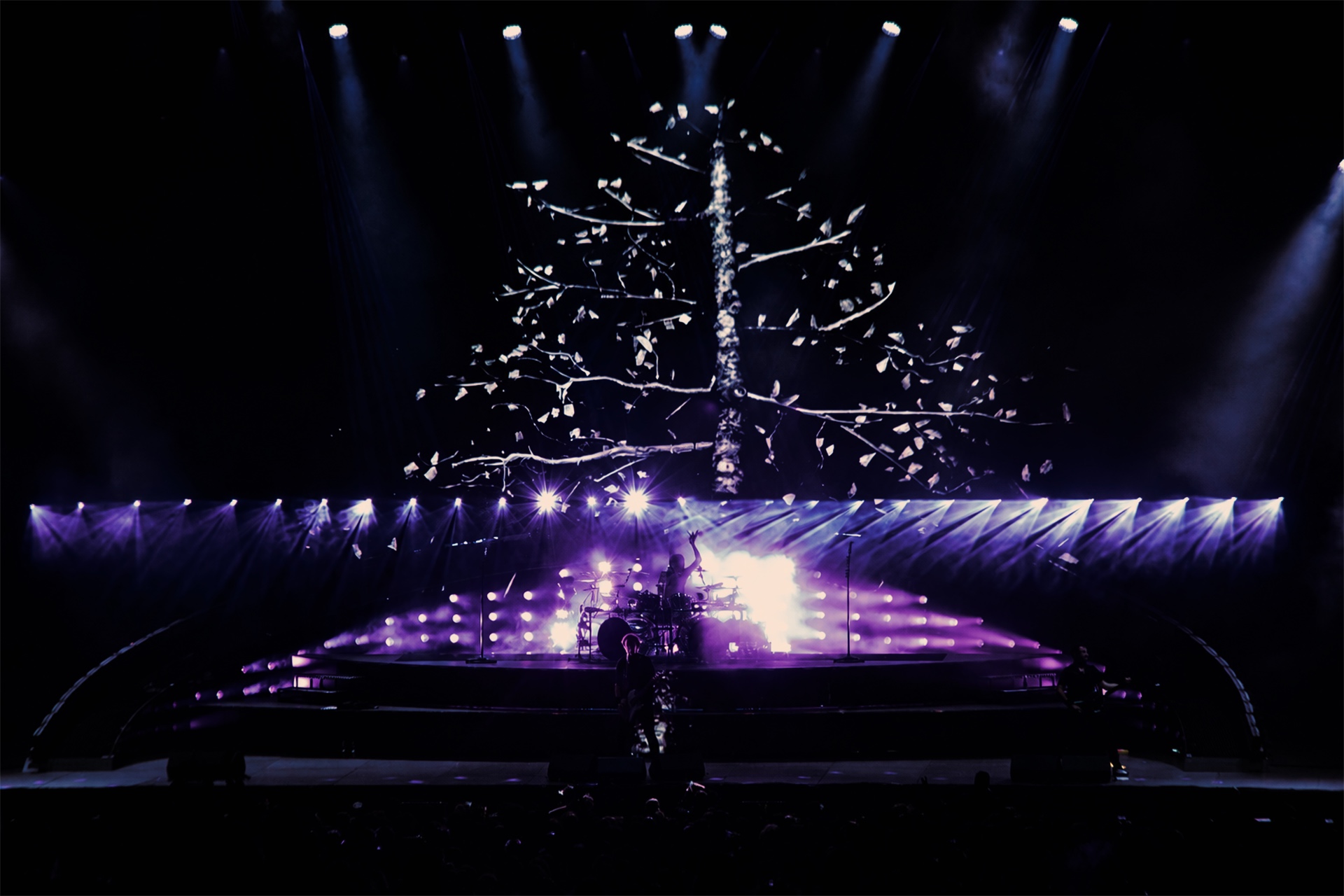
As sound was at the heart of the project, the pupils began by listening to various marine soundscapes, such as the crackling of pistol shrimp, the echolocation clicks of dolphins, and man-made sounds such as a boat engine. Their teacher provided them with a set of questions to help them describe what they heard and how it made them feel. They then discovered two pieces of metal music linked to the ocean: Mesopelagic: Into the Uncanny by the band The Ocean, and Ocean Planet by Gojira, taking the time to listen at their own pace, observe how it made them feel, and reflect on how this music enriched their sensory and emotional experience of the ocean.
This initiative, integrated into the school curriculum, aims in particular to develop young people’s ‘ocean literacy’ (ocean literacy), that is to say, an understanding of the links between the ocean and humans, and knowledge of behaviours that help protect marine ecosystems. The concept of ocean literacy goes beyond the mere transmission of information to encompass an emotional connection to the ocean and the capacity for action. The project also draws on GreenComp, the European framework for sustainable development skills, and on Paolo Freire’s research into critical hope as a means of transforming eco-anxiety into constructive engagement. Finally, art-based action research approaches aim to make a difference on the ground whilst generating new scientific knowledge. In the case of the Écouter l’océan project, the approach promotes both the acquisition of knowledge and the expression of emotions through the creative process.
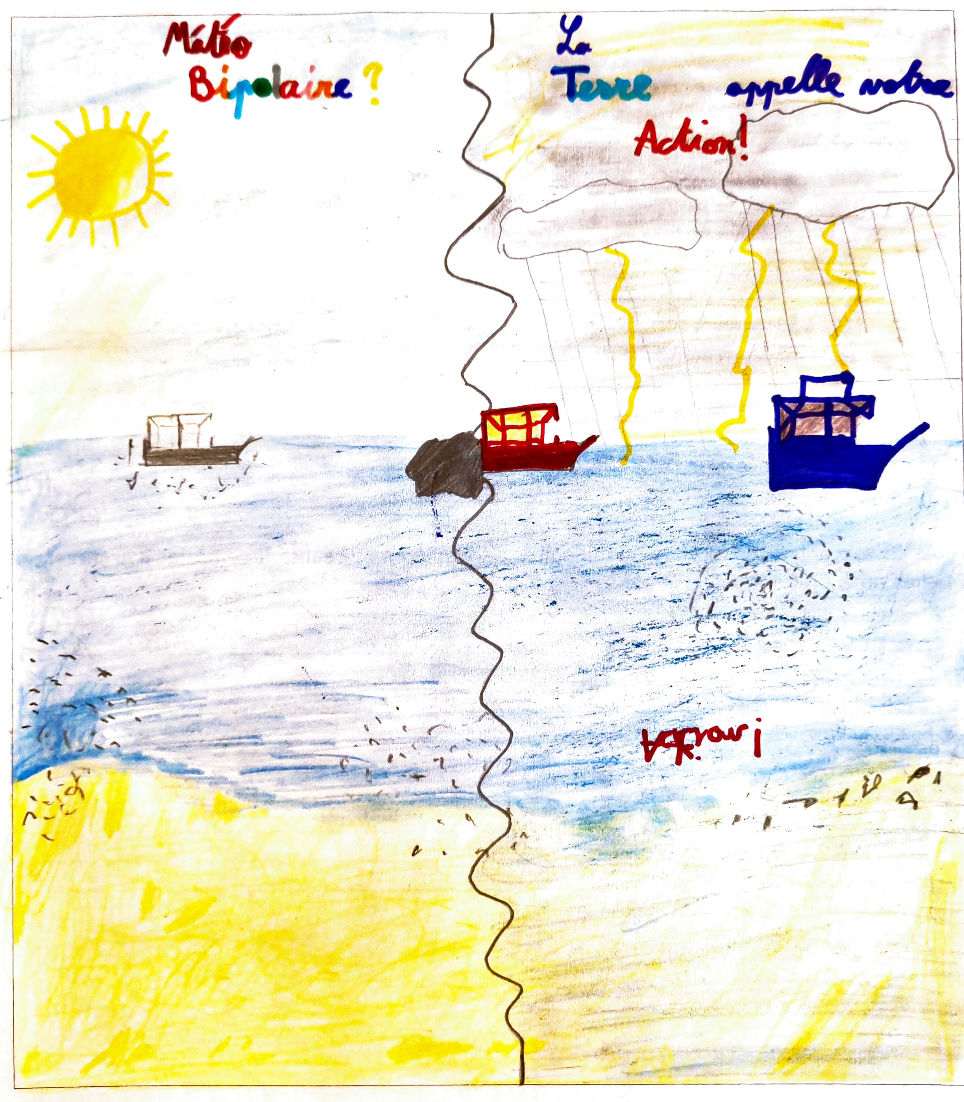
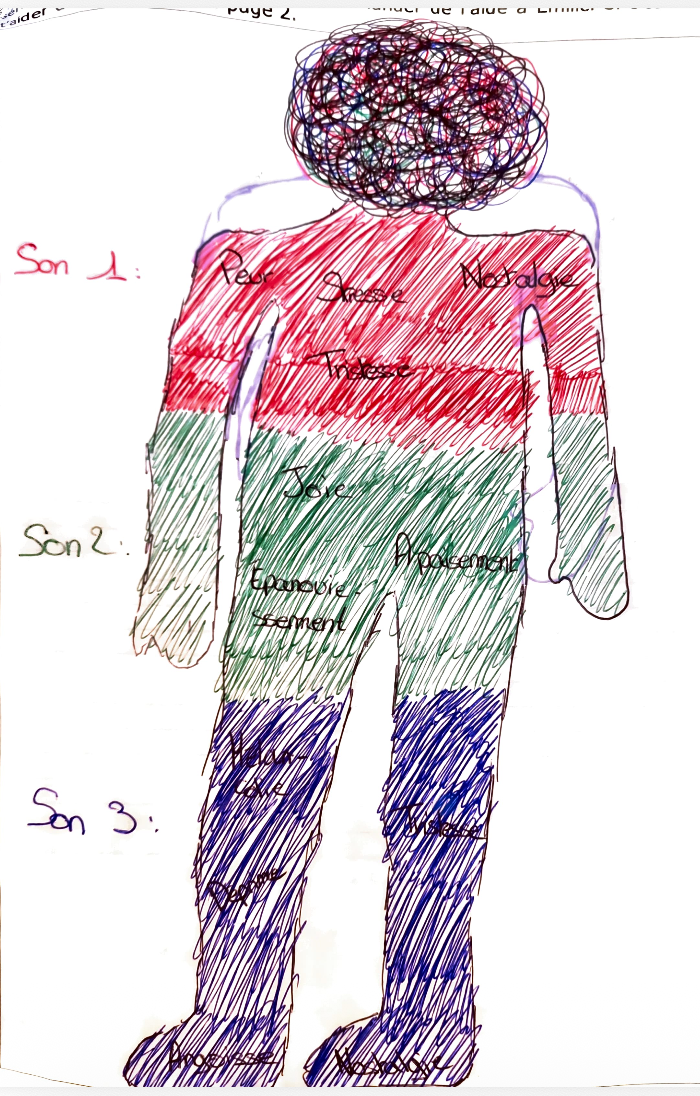
What did the pupils take away from this initial experience? A detailed analysis of the results will lead to the publication of a scientific article, but we can already confirm that this small-scale, time-limited experiment was well received by the majority of pupils and enabled the researchers to collect their written feedback – which was rich and at times surprising – both on the reactions and emotions evoked by the sounds and music, and on the links (or lack thereof) with their desire to take action to protect the ocean in the future. At this stage, the programme has gathered individual responses, and there were no plans to undertake a large-scale artistic production, which would have required several months’ work. Nevertheless, these results, along with the lessons learnt from the sessions themselves, will inform the implementation of the project on a larger scale during the 2026–2027 school year.
The programme is already set to be launched in France, in schools within the Nice, Versailles and Dijon academic districts, as well as in lower and upper secondary schools in Oslo and Stavanger, Norway.